
Last updated November 15, 2026
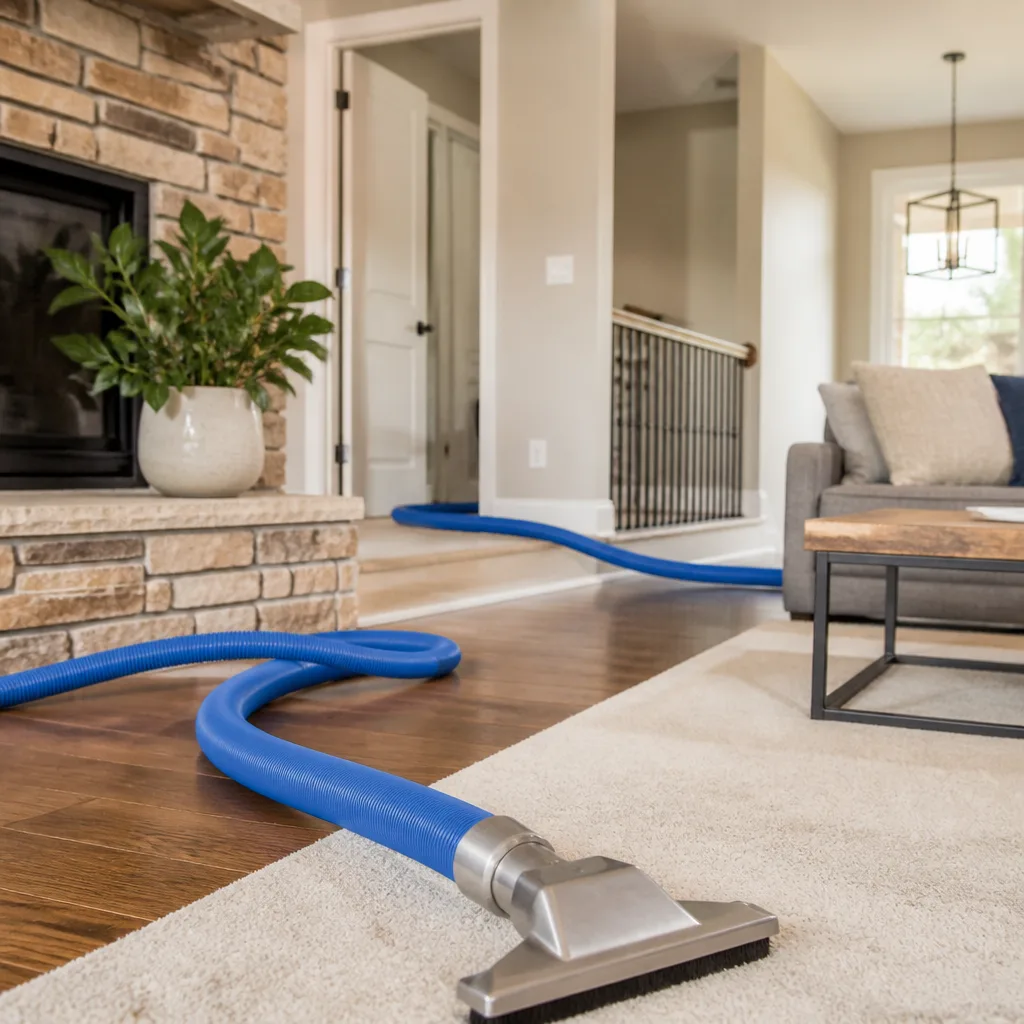 Whole-home duct cleaning
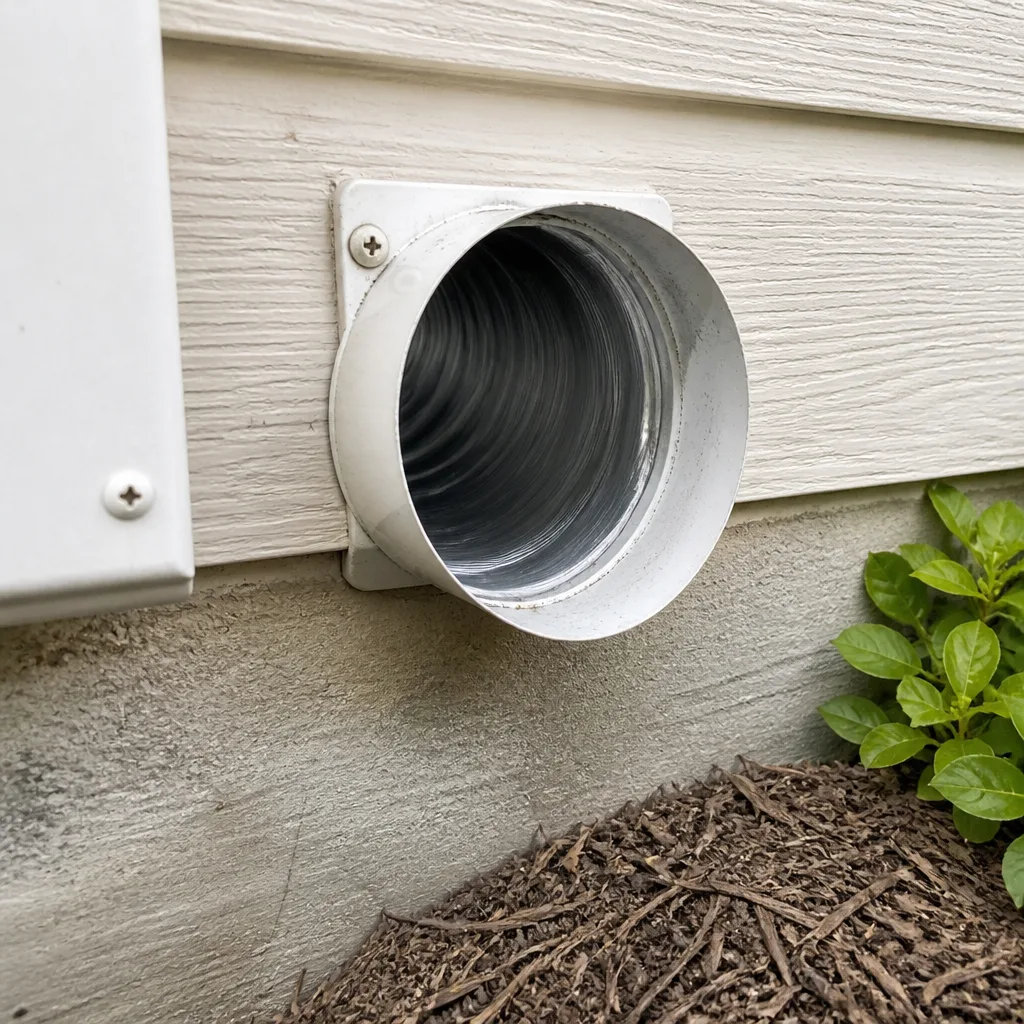 Dryer vent cleaning
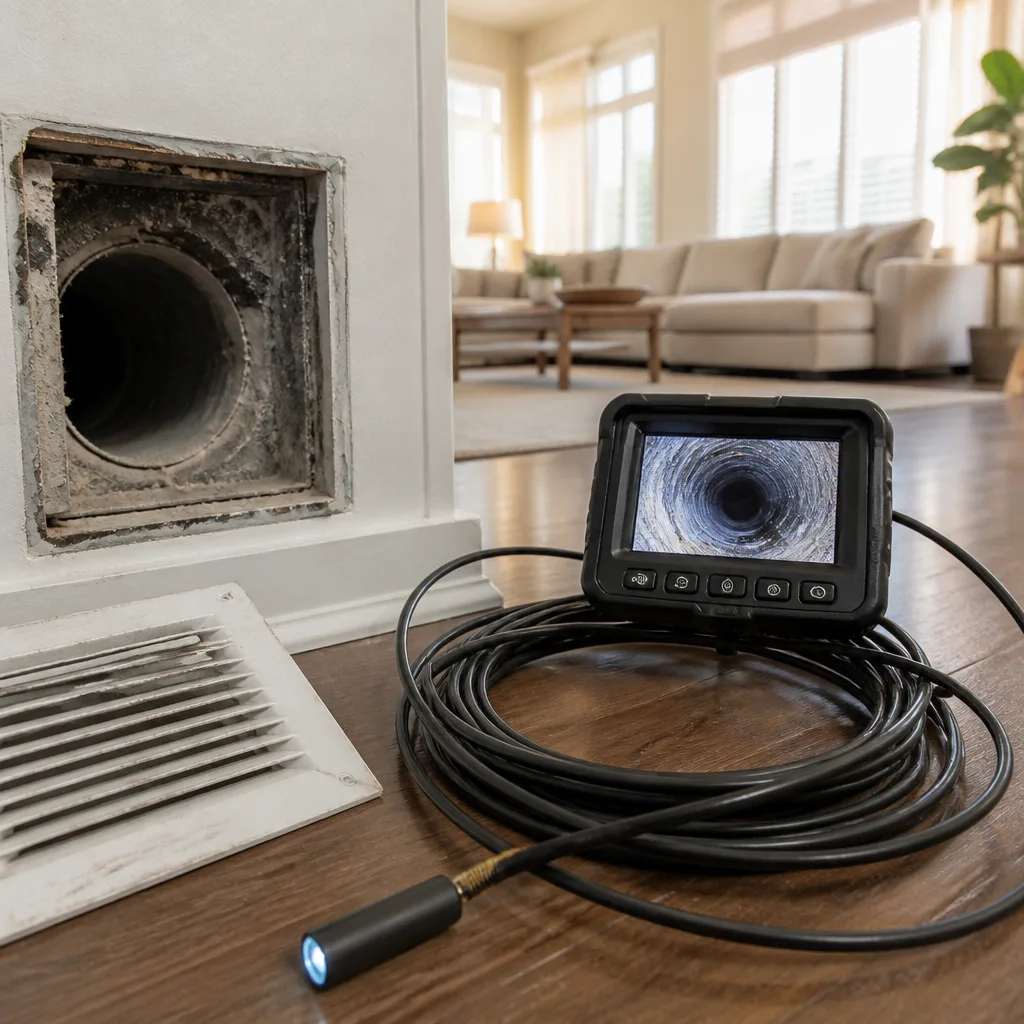 Camera inspection
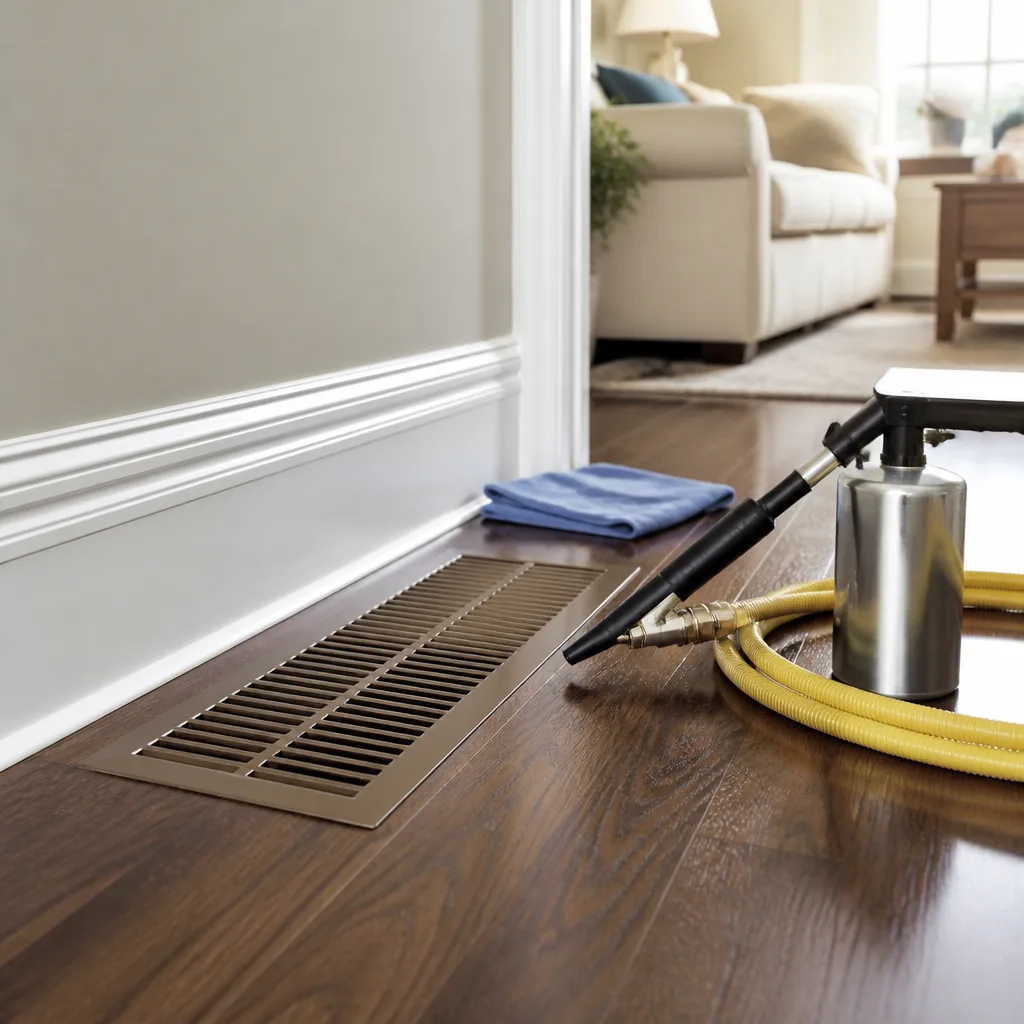 Sanitizing & deodorizing
Whole-system duct and dryer vent check with before-and-after photos - you see exactly what came out of your vents
That "$99 whole-house special" is a bait ad - the real number appears once they are in your hallway, or the "clean" is a shop-vac at the register. We photograph the inside of your ducts before and after instead.
Air Duct Cleaning Troubleshooting in El Paso: Common Problems and How to Fix Them
If your ducts were cleaned recently and the house still smells faintly of a wet dog the moment the AC kicks on, the cleaning either missed the source or never reached it. That’s an uncomfortable thing to consider after you’ve already paid for the work, but it’s the honest starting point for troubleshooting. Most duct complaints – musty odors, dust that settles within days, rooms that never seem to get enough air – have a specific mechanical cause. Your job here is to narrow down which one. This guide maps each common symptom to the duct component most likely responsible, so you walk into a conversation with any contractor in El Paso asking precise questions instead of describing a vague feeling.
Quick Answer
Persistent duct problems after a cleaning usually trace back to one of four causes: debris was never fully removed from the return drop, a flexible duct has collapsed or disconnected, the evaporator coil (not the ductwork) is the actual source of the odor, or the original job was surface-only work that never touched the duct walls. Air duct cleaning in El Paso deals with an unusually heavy fine-dust load from caliche soil and wind events, so return runs clog faster than supply runs here. The sections below walk through how to tell these apart before you spend money.
Styles & brands we work with
- Whole-home duct cleaning
- Dryer vent cleaning
- Camera inspection
- Sanitizing & deodorizing
Table of Contents
- The Symptom-to-Cause Matrix: What Your Ducts Are Telling You
- Why El Paso Dust Behaves Differently: Caliche, Wind, and Return Drops
- How to Self-Assess Your Ducts With a Flashlight and a Phone Camera
- Re-Clean or Look Upstream? Deciding What’s Actually Wrong
- Red Flags That the Original Cleaning Was Surface-Only
- Noise, Whistling, and Uneven Room Pressure: What They Mean
- When the Problem Is Damage, Not Dirt: Repair vs. Cleaning
- The Dryer Vent Is a Separate System: Don’t Diagnose the Wrong Thing
The Symptom-to-Cause Matrix: What Your Ducts Are Telling You
Before you call anyone, write down exactly what you’re experiencing. Vague complaints (“the air feels stale”) produce vague diagnoses, and vague diagnoses produce wasted money. The matrix below is the first tool we use on a call – if you can name your primary symptom, you can usually narrow the cause to two or three candidates before a technician ever steps through the door.
- Musty, earthy, or wet-dog odor when the system runs: Most often a wet or fouled evaporator coil, an uncleaned drain pan, or microbial growth where the air handler meets the supply plenum. Less often the duct walls themselves. Cleaning the ducts will not fix an odor whose source is the coil.
- Fine gray or tan dust settling within days of cleaning: Debris still in the return drop, an unsealed duct joint pulling air from a dusty garage or attic, or a filter that doesn’t match the blower’s draw. El Paso’s caliche dust is heavy and fine, so it redeposits quickly when it’s still present.
- Weak airflow in far rooms, strong in near ones: A collapsed or crushed length of flex duct, a disconnected joint, or a supply branch that was never properly balanced. Common in older homes where flex was pulled tight through tight runs.
- Whistling or rushing noise at a register: A branch that’s undersized, a register blocked by furniture or carpet, or a partially closed damper somewhere upstream. Sometimes the noise is the first symptom of a nearly closed flex duct at the plenum.
- Persistent respiratory irritation among occupants but no visible dust: Very often coil or drain-pan problems, or ventilation that isn’t bringing in fresh air. Duct cleaning can help if there’s true accumulation, but only after the actual source is controlled.
Notice how few of these end in “clean the ducts again.” That’s the point of the guide. In our experience, roughly the same share of “the cleaning didn’t work” calls turn out to be coil, drain, or duct-damage issues as turn out to be incomplete cleaning. You need to know which category you’re in before you spend another dollar.
Why El Paso Dust Behaves Differently: Caliche, Wind, and Return Drops
El Paso dust is not like the dust in a humid climate. Two things make it distinct. First, the region’s caliche soil – a hard, calcium-carbonate-rich layer common throughout the Chihuahuan Desert and much of El Paso County – breaks down into a fine, pale, mildly alkaline powder when disturbed by construction, grading, or vehicle traffic. Second, spring and early summer here bring high-wind events that push that powder into every gap in a home’s envelope. The duct system takes the brunt of it, and it takes it unevenly.
Here’s what that means in practice for troubleshooting: the debris profile of an El Paso duct system is not uniform. Because caliche dust is heavy and fine, it travels through supply runs relatively easily, but it tends to settle and cake inside the large return drop – the vertical or horizontal chase that returns air from the home back to the air handler. In many homes, the return is where 60-70% of the total accumulated debris lives, even when the supply branches look reasonably clean. If a cleaning crew treated the system as though all runs were equal, the return is the most likely place they left mass behind.
That return buildup matters for diagnosis because it directly causes room-to-room pressure imbalance. A clogged return can’t pull air from the distant rooms as effectively, so those rooms run slightly under-pressurized. They feel “dead” – low airflow – even when the supply branch servicing them is perfectly clear. Homeowners often assume the problem is supply-side and start closing registers to “balance” things, which makes the imbalance worse. Before you touch a damper, consider whether the return is the actual bottleneck.
Our technicians have up to 10 years of experience, and the pattern we see most consistently in El Paso is a system whose supplies were cleaned carefully while the return was brushed only through the visible opening. That’s the mechanical reason so many homes still smell and dust within weeks. If your cleaning was done by a generalist HVAC company that does duct work as an add-on, this is exactly the shortcut to ask about.
How to Self-Assess Your Ducts With a Flashlight and a Phone Camera
You can gather useful evidence in about ten minutes without any special tools. You don’t need to – and shouldn’t – go crawling through your attic or reach into the air handler if you’re not comfortable. But at the register openings where the duct meets the room, you can learn a great deal. Do this before you call anyone. It will make the phone conversation far more productive.
- Turn off the system. Let it sit ten minutes so any loose dust settles.
- Remove one supply register in a room you care most about (a bedroom or living area, not a closet). Take out the two or four screws and set them aside.
- Shine a flashlight into the duct and photograph what you see using your phone’s camera with the flash on. The phone will often reach further than your eye.
- Look for three things: depth of visible accumulation (a light film is normal; a visible fur of debris is not), condition of the duct liner (flex duct interior should look smooth and gray-black; if it’s peeling, torn, or shiny-wet, note it), and the presence of any loose material at the duct-to-register seam.
- Repeat at one return grille – usually a large grille on a wall or floor near the air handler. The return is where you should be most honest about what you find.
- Take a “before” photo for yourself. You will want this for comparison if you hire anyone. It’s also what a legitimate contractor will do as a matter of course.
What you’re looking for is not “is there dust” – there is always dust. You’re looking for depth, texture, and moisture. A fine pale film consistent with El Paso caliche is expected. A dark, wet, or peeling film is not, and it points to a moisture problem that needs to be addressed before or alongside cleaning. And if you find that you can’t see the bottom of the return drop even with a flashlight, the answer to “was my duct cleaning complete” is likely no.
Re-Clean or Look Upstream? Deciding What’s Actually Wrong
The single most expensive mistake in duct troubleshooting is assuming the ducts are the problem when the actual source is somewhere else in the system. “Upstream” here means anything between the return grille and the room supply registers – which includes the air handler, the evaporator coil, the drain pan, the blower wheel, and the supply plenum. Cleaning the ducts without addressing a fouled coil is like mopping a floor with a running faucet overhead.
A re-clean of the ductwork is warranted when you can find clear evidence that debris remains in the system. That usually means one of the following is true:
- You have before-and-after photos from the original job and the “after” photos look like the “before” photos.
- You can see visible debris accumulation at multiple register openings within a few months of the work.
- The original company did not photograph the job at all, and you have no record of what was found or removed.
- The return drop was never accessed – typically because the crew didn’t remove the return grille.
- The cleaning was completed in a fraction of the typical time for a home of your square footage. Thorough duct cleaning with proper equipment takes real hours, not minutes.
An upstream problem is more likely when the ducts themselves look reasonably clean but the symptoms persist. Consider these indicators:
- A wet, musty, or biological smell that’s strongest near the air handler closet or the return grille.
- Water staining anywhere around the indoor unit or the drain line.
- Airflow problems that vary with weather or time of day rather than being constant.
- A blower wheel that sounds louder than it used to, suggesting buildup on the blades.
- Rust visible near the coil housing or plenum joints.
If two or more of the second group are true, the answer is not a re-clean. The answer is a diagnostic visit that examines the coil and drain pan first. We do this before we clean anything, because cleaning a system whose source problem isn’t addressed is a waste of your money and a distraction from the fix that will actually work.
Red Flags That the Original Cleaning Was Surface-Only
Not all duct cleaning is the same job. In El Paso, as anywhere, there’s a spectrum from rotary-brush-and-negative-pressure work that scrubs the duct walls and captures the debris to “cleaning” that amounts to waving a vacuum hose near a register for a few minutes. If your previous cleaning was the latter, you can usually detect it. The signs are consistent and, once you know them, hard to miss.
- Visible debris at register edges within weeks. A proper clean with rotary-brush equipment physically dislodges adhered material from the duct walls. A vacuum-only pass doesn’t, so the dust re-enters the airstream within days. If your registers are dusty again before the next filter change, that’s the first red flag.
- No before-and-after photos. A legitimate contractor photographs every system they clean – before, during, and after. If no photos were provided, you have no way to know what was done, and neither does the company that did it.
- Job completed suspiciously fast. We’ve seen this especially with add-on duct “cleaning” offered alongside a routine HVAC service call. A thorough cleaning of a typical El Paso home – including the return drop – is not a 30-minute addition to a tune-up.
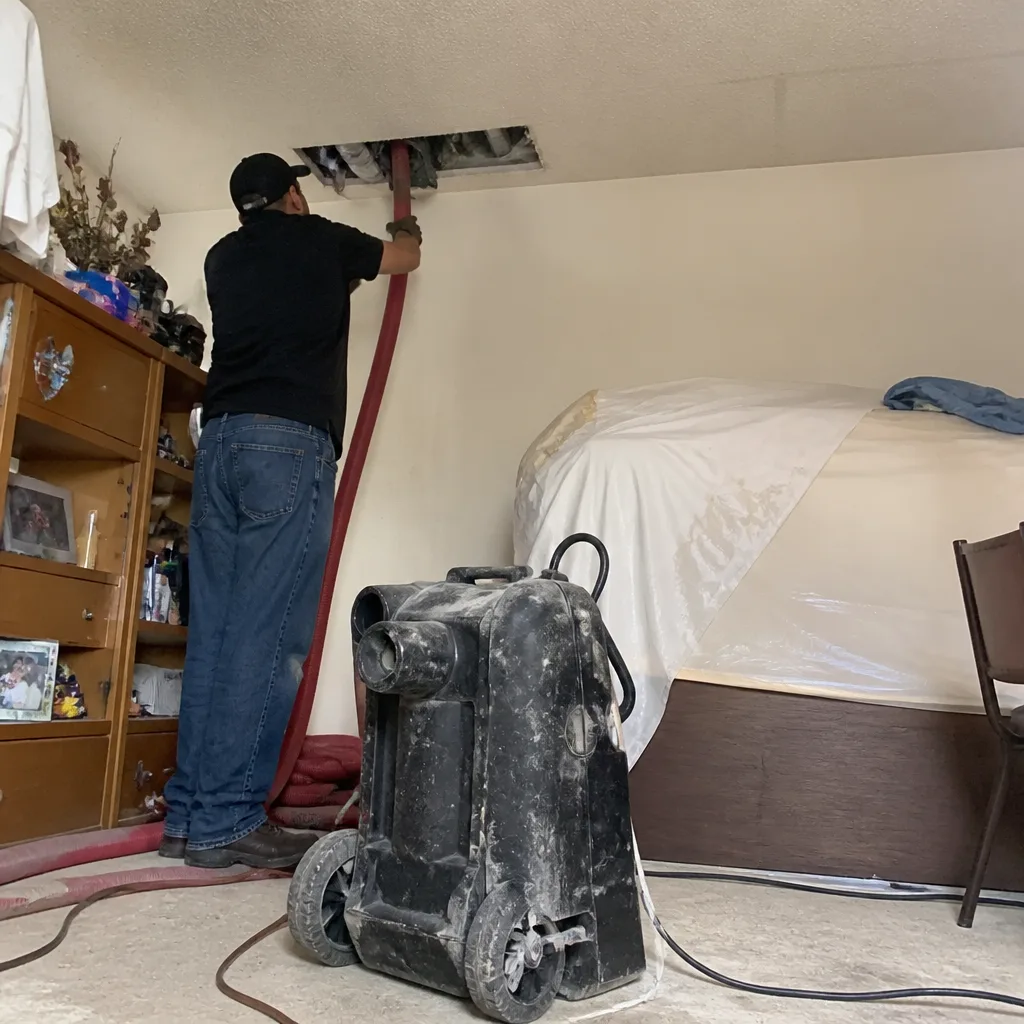
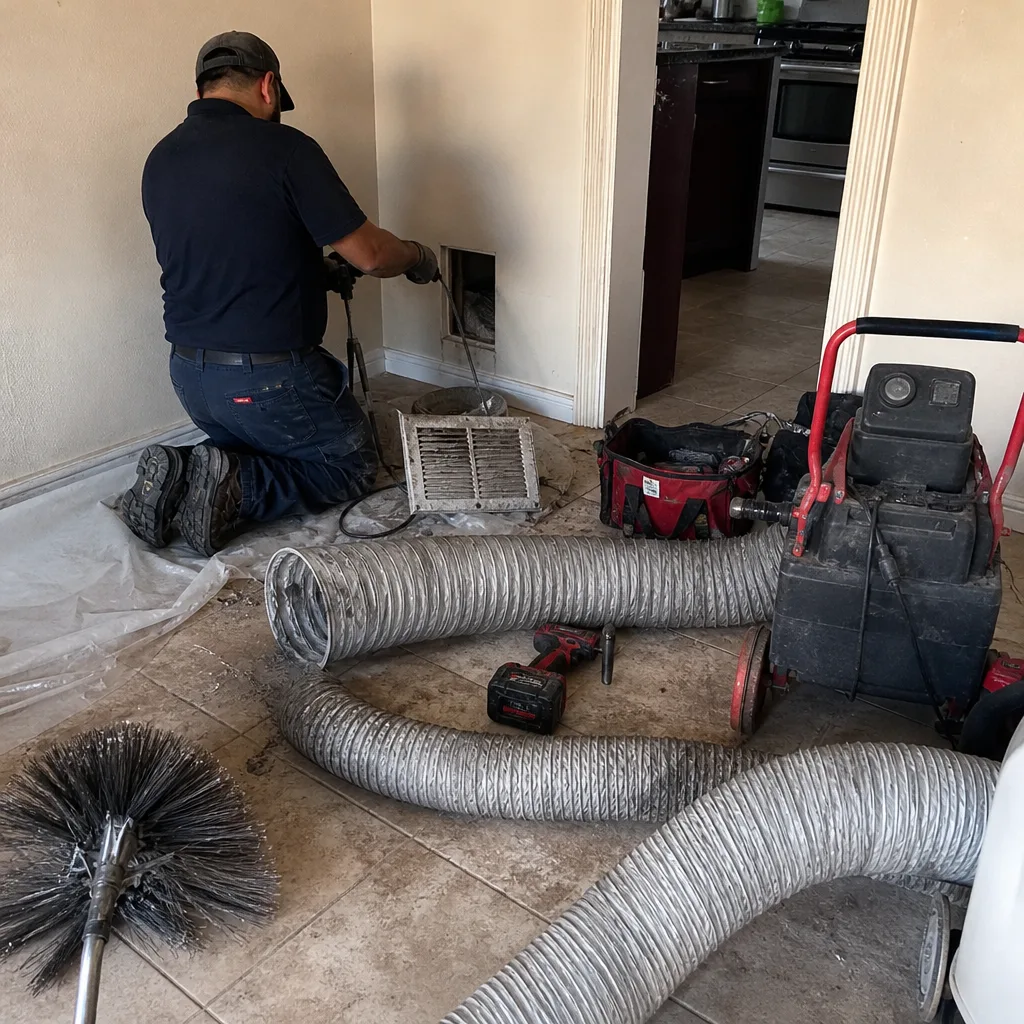
- No equipment visible in the home. Proper cleaning requires a rotary-brush tool and negative-pressure or filtration equipment. If you didn’t see the tools, they weren’t there.
- No access to the return. If the return grille wasn’t removed and the drop was never touched, the job was incomplete by definition – and in El Paso it’s the return that most needs the work.
- Same day, multiple homes. Thorough cleaning takes time. A truck moving through several homes in an afternoon is not the same as a professional-grade cleaning.
If you can check two or more of those boxes, the honest conclusion is that the previous work didn’t reach the problem. What you need is not a discount on a re-clean. You need evidence of method. Ask any company you call what equipment they use and whether they photograph their work. If the answers are vague, keep calling.
Noise, Whistling, and Uneven Room Pressure: What They Mean
Most homeowners don’t think of noise as a duct problem. It almost always is. A well-designed and well-maintained duct system runs quietly. If yours doesn’t, the noise is describing a mechanical condition – and in many cases that condition is also what’s causing your airflow and dust complaints. Learning to interpret the sounds is one of the most useful diagnostic skills you can develop.
Whistling at a register usually means the branch is undersized for the airflow it’s being asked to move, or there’s a significant obstruction somewhere in the run. If it started suddenly, suspect collapse or a loud object falling into the duct. If it’s been there the whole time you’ve owned the home, suspect a design issue.
Rushing or roaring from a single return often indicates that one return is doing the work of several – the other returns are choked off or disconnected. In an El Paso home where more than one return drop exists, an equal sound from each is the goal. One loud return with quiet ones nearby is a telltale of a blocked branch.
Flapping or rattling when the system starts frequently indicates flex duct that has come loose from its collar or is pinched against framing. The air hits the loose material and starts it moving.
Rumbling or humming throughout the home usually points to a blower-wheel or motor issue rather than ductwork, but the blower sits inside the air handler and can resonate through the entire system.
Behind all of these symptoms is the same underlying variable: static pressure. Ductwork is designed to move a certain volume of air at a certain pressure. Debris on the walls, collapsed lengths, and disconnected joints all raise the pressure the blower has to fight against. High static pressure produces weak airflow, noise, and premature equipment wear. Before you spend money on cleaning again, consider whether you’re actually chasing a duct-cleaning problem or a duct-integrity problem. In our experience, quite a few of the “clean the ducts again” calls we get in El Paso are really calls about duct repair.
When the Problem Is Damage, Not Dirt: Repair vs. Cleaning
Duct cleaning and duct repair are two different services, and most cleaning-only companies will tell you they only do the first. That’s a real limitation for El Paso homeowners, because the desert climate – dry, dusty, and hard on flex duct that wasn’t installed with enough slack – produces actual physical damage more often than you might expect. If a duct joint has come loose, if a length of flex has collapsed under its own weight against a joist, or if a supply branch has been crushed by someone stepping through the attic, no amount of cleaning will solve the problem. It has to be repaired.
Here’s how we think about the two:
- Clean when the problem is accumulation. Debris on duct walls, dust in the return drop, settled caliche fine particles throughout the system. The solution is rotary-brush cleaning with proper extraction.
- Repair when the problem is integrity. Disconnected joints, crushed flex, torn duct liner, broken collars, or damage to the plenum box. The solution is sealing, reconnecting, or replacing the damaged section.
- Both, sometimes. A crushed flex run in an attic often collects debris at the pinch point. Cleaning without repairing leaves the pinch point and its debris behind. Repairing without cleaning the rest of the system leaves the accumulated dust to redeposit.
The repair capability is why we offer air duct cleaning and repair as separate but coordinated services. When we open the system for cleaning, we see the shape it’s in. If we find damage, we can address it on the same service call rather than sending you to a different company. That saves time and it prevents the frustrating loop of cleaning, waiting, and finding dust again because the source was upstream all along.
The Dryer Vent Is a Separate System: Don’t Diagnose the Wrong Thing
Homeowners sometimes conflate the dryer vent with the HVAC ductwork. They’re different systems with different failure modes and different stakes. The dryer vent is a short, single-run exhaust path from the dryer to the exterior. When lint impacts inside that run, the dryer works harder, takes longer, gets hot, and the risk profile goes up. This is not a minor maintenance checkbox. It’s a fire-safety issue, and lint-impacted dryer vents are consistently classified by fire-safety authorities as a leading cause of residential fires.
Why bring this up in a duct troubleshooting guide? Because two of the symptoms that send people looking at their HVAC ducts – “the house smells hot or strange” and “the appliances are working too hard” – can actually come from a lint-clogged dryer vent. If your dryer takes two cycles to dry a normal load, if the exterior vent flap barely moves, or if the laundry room feels humid and hot, the problem is the dryer vent, not the ducts. Diagnosing the wrong system wastes money.
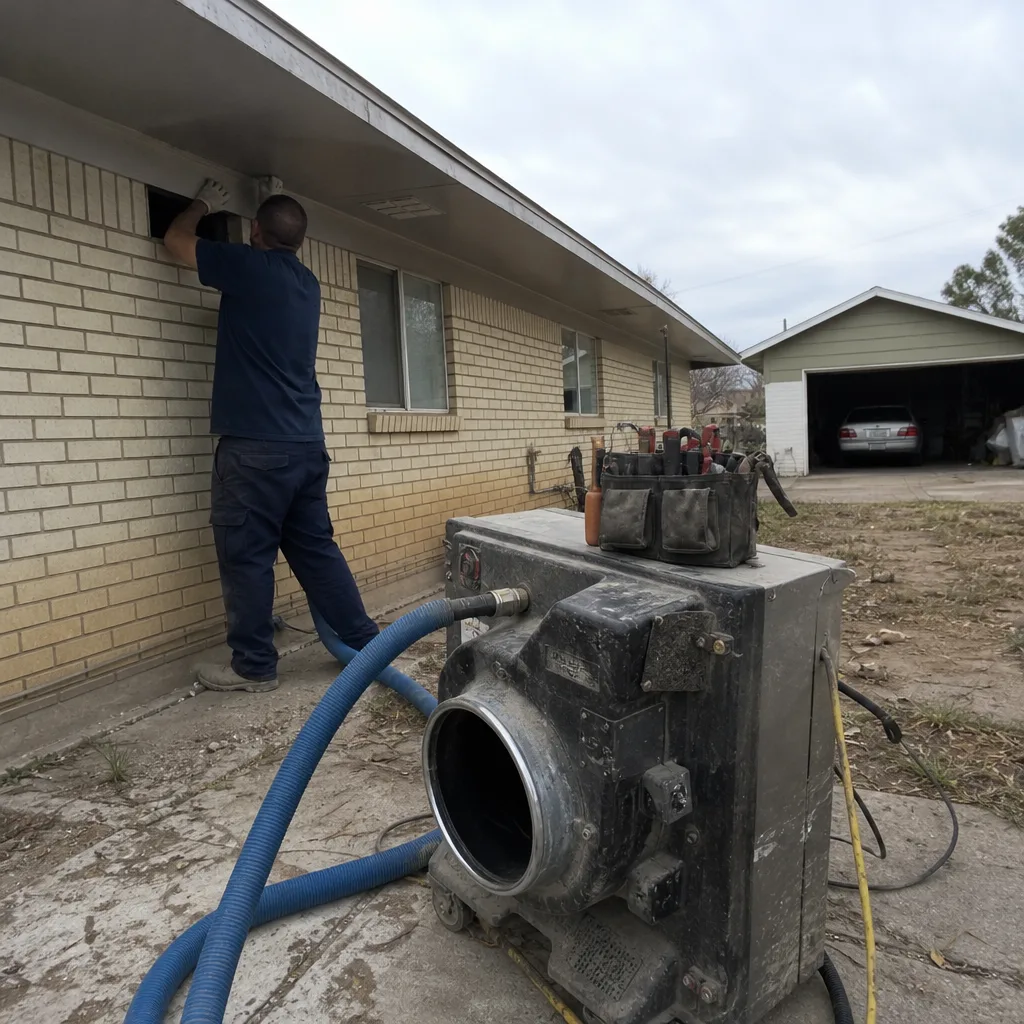
Our dryer vent cleaning service treats the full run, not just the visible duct behind the dryer. That matters because most lint accumulates where you can’t see it – at elbows, at the exterior hood, and in the vertical sections. If you haven’t had the dryer vent evaluated in a while and you’ve been troubleshooting air quality, put this on your list. It’s cheap insurance against a problem that’s genuinely worse than dirty ducts.
Common Mistakes to Avoid
- Assuming a re-clean will fix a smell. Musty odors usually originate at the coil or drain pan, not in the duct walls. Cleaning the ducts without addressing the actual source leaves the smell and wastes the cleaning.
- Closing registers to “balance” the system. Closing registers to force more air into weak rooms raises static pressure and makes airflow worse overall. If a room is under-served, the cause is upstream – return blockage, collapsed flex, or a design issue.
- Judging the job by price alone. In El Paso, low-price duct cleaning is often add-on work performed without access to the return drop. A price that seems unusually low usually reflects a job that skips the part of the system that matters most.
- Overlooking the return drop. The return is where caliche dust accumulates fastest in this climate. If the company didn’t remove the return grille and work the drop, the cleaning was incomplete.
- Confusing dryer-vent symptoms with duct symptoms. A dryer that takes two cycles, a laundry room that stays hot, or a vent flap that barely opens is a dryer-vent problem. Keeping it on your radar matters for fire safety and for the accuracy of diagnosis.
- Skipping photos before and after. If a contractor doesn’t photograph their work, you have no way to verify it later. The photos are your evidence – ask for them before the job, not after.
- Calling a generalist for a specialist job. HVAC tune-up companies that add duct cleaning as an add-on rarely have the rotary-brush and negative-pressure equipment a real cleaning requires. Ask what they use before you book.
See the difference
 Before
 After
 Before
 After
 Before
 After
When to Call a Professional
You should call a professional whenever your troubleshooting points to accumulation you can’t fully see, moisture you can’t fully investigate, or physical damage you’re not equipped to repair. Specifically: visible debris at multiple registers within weeks of a cleaning; any musty or biological odor near the air handler; a return drop you can’t see into; suspect collapsed or disconnected flex duct; and any indication of water in or around the system. A professional diagnostic visit lets you confirm the cause before you spend money on the fix. Duct Cleaning El Paso offers free estimates in El Paso – call (866) 942-6158. We answer 24/7. Fast dispatch from 7am to 7pm, Sunday through Friday.
Our technicians have up to 10 years of experience, and we run professional-grade equipment – including Abatement Technologies filtration units on site to protect indoor air quality during the job, and Rotobrush rotary-brush systems that physically scrub duct walls rather than merely vacuuming. If the job calls for repair, we handle that too. One visit, one diagnosis, one set of clear before-and-after photos so you can see exactly what was found and what was removed.
Frequently Asked Questions
The most likely cause is that the smell originates upstream of the ductwork – usually in a fouled evaporator coil or a drain pan that hasn’t been cleaned. Duct cleaning removes debris from duct walls, but it doesn’t touch the coil. If your ducts are genuinely clean and the smell persists, the coil and drain pan are the places to look. Call (866) 942-6158 for a diagnostic visit that examines both.
Ask for before-and-after photos of your own ductwork, taken during the job, and look for the return drop in those photos. A properly cleaned system will have visible evidence of work at the return, and the photos will show the interior of the ducts, not just the exterior of the equipment. If the company can’t produce photos, or if the job was completed in far less time than you’d expect for your home’s square footage, the work likely didn’t reach the source. Call (866) 942-6158 for an honest second opinion.
Yes, in a specific way that affects duct maintenance. The region’s caliche soil produces a fine, heavy, pale mineral powder when disturbed, and El Paso’s wind events push it into homes efficiently. In duct systems termss, this means the return drop accumulates material faster than supply branches do, and the debris is denser than typical household dust. Diagnosing duct problems here starts with looking at the return, not the registers.
Sometimes, but only when the cause is accumulation. If dust has restricted a branch or the return is heavily loaded, cleaning can restore balance. If the problem is a collapsed or disconnected duct, no cleaning will fix it – the duct has to be repaired. Proper diagnosis separates the two before any work begins. Call (866) 942-6158 to schedule a free estimate.
There’s no single correct number. Homes with pets, recent remodeling, an occupant with respiratory sensitivity, or a history of heavy dust intrusion often benefit from more frequent cleaning. In El Paso, the caliche dust and wind patterns can make a difference. A reasonable starting point is to assess every couple of years by looking at what’s in the return drop. If you’re seeing consistent debris accumulation when you check, it’s time.
Dry conditions contribute to one specific kind of damage: flex duct that’s been installed with too little slack can crack or peel along its inner liner over time, and the sealant at joints can degrade faster in a low-humidity environment. If a duct is torn, crushed, or disconnected, it has to be repaired, not cleaned. Call (866) 942-6158 and we’ll assess whether repair is part of the fix your system needs. Estimates are free.
The Bottom Line
Most duct complaints after a cleaning have a diagnosable cause, and the diagnosis usually happens before the second cleaning. Start by matching your symptom to the matrix – odor, dust, weak airflow, noise – and check the return drop specifically, because in El Paso that’s where caliche dust builds fastest. Use the flashlight-and-phone-camera approach at your registers to see what’s actually in your ducts. Look at the evidence from your prior job: photos, timing, whether the return was accessed. And keep dryer-vent concerns separate – that system has its own stakes. When you’re ready for a professional who uses rotary-brush and negative-pressure equipment, photographs the work, and can repair what cleaning alone can’t fix, we’re here. Call Duct Cleaning El Paso at (866) 942-6158 for a free estimate. Cleaner air starts in the ductwork.
Written by the team at Duct Cleaning El Paso.